
Scar Revision After Eyelid Trauma
How to tell whether a scar is still maturing normally or changing eyelid function.
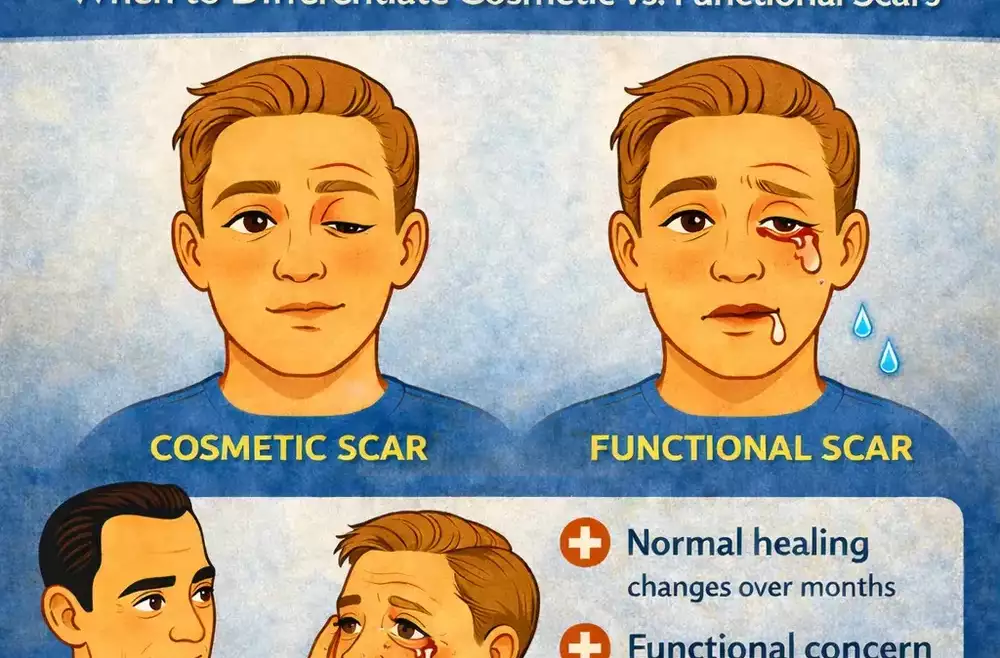
Eyelid scars often heal impressively well, but trauma scars can sometimes tighten and pull the eyelid out of its natural position. The difference between a cosmetic scar and a functional scar matters—because functional scars can cause dryness, tearing, irritation, and incomplete closure.
Many patients assume they must wait a full year. In reality, you can often optimize healing early, and you can evaluate functional problems at any time.
For reconstruction options after trauma, see Eye Trauma.
At a Glance
- Normal healing: changes over months
- Functional concern: lid turns in/out or won’t close
- Symptoms: irritation, tearing, dryness
- Non-surgical: scar optimization (case-dependent)
- Surgical: revision to release pull and restore contour
- Goal: comfortable closure + natural shape
Normal scar maturation (what’s expected)
- Weeks: redness, firmness, swelling
- Months: softening and flattening
- 6–12+ months: fading and texture refinement
Eyelids move constantly, so early tightness can be part of normal healing. The key is whether lid position is stable and the eye surface stays comfortable.
Functional problems that deserve evaluation
- Ectropion (lid turns outward) → dryness and tearing
- Entropion (lid turns inward) → lash irritation
- Lid notching at the lash line
- Lagophthalmos (incomplete closure)
If a scar is changing eyelid mechanics, it can affect the cornea over time—so it’s worth evaluating.
A realistic healing timeline (what you might notice)
Healing varies, but many patients describe a similar pattern:
- Days 1–3: swelling and bruising can peak; it may look worse before it looks better.
- Days 4–7: swelling begins to soften; comfort often improves; early contour becomes easier to assess.
- Weeks 2–4: bruising fades; symmetry and function become more stable; ongoing irritation should be improving.
- Months 2–6: scars and subtle contour changes continue to refine; final “settled” appearance becomes clearer.
What matters most is the trend. Steady improvement is reassuring. New or worsening functional symptoms deserve a check‑in.
Common myths (and what’s actually true)
- Myth: “If it doesn’t hurt much, it can’t be serious.”
Reality: Some injuries affect alignment, drainage, or eyelid position with surprisingly little pain. - Myth: “If the skin is closed, everything underneath is fine.”
Reality: Inner-corner injuries can involve tear drainage, and fractures can change eye position even after swelling resolves. - Myth: “I should just wait until swelling is completely gone.”
Reality: Early evaluation can be important for time‑sensitive issues and creates a baseline for safe observation.
The goal isn’t to overreact—it’s to match your symptoms to the anatomy that was injured, so you don’t miss a fixable problem.
Non-surgical optimization (when appropriate)
Depending on scar type and stage, options may include guided scar care and therapies designed to reduce tightness. The best approach depends on whether the problem is surface texture or deeper tethering.
A specialist can tell you whether continued maturation is likely to help—or whether the scar is mechanically pulling the eyelid.
Surgical scar revision: the goal
Revision is considered when the scar distorts eyelid anatomy or causes symptoms. Techniques may include releasing tight scar bands, repositioning tissues, and restoring contour. Some cases benefit from grafting or tissue rearrangement to reduce tension and support closure.
The goal is to restore comfort and natural lid position.
Recovery after revision
Swelling often improves in ~1–2 weeks, while scar refinement continues over months. Follow-up checks eyelid position, closure, and surface comfort.
What to watch for during the first two weeks
The early healing period is when you’ll notice whether symptoms are trending in the right direction. It’s helpful to track:
- Whether swelling is steadily improving
- Whether comfort is improving with blinking and screen time
- Whether tearing or dryness is changing
- Whether eyelid contour looks more stable day to day
If something is getting worse instead of better, that’s a reason to contact your surgeon.
A simple next‑steps plan
If you’ve had an eyelid or orbital injury and you’re unsure what matters most, a structured evaluation is the fastest way to clarity. You can review what’s treated and what to expect on our Eye Trauma page, then schedule an appointment for individualized guidance.
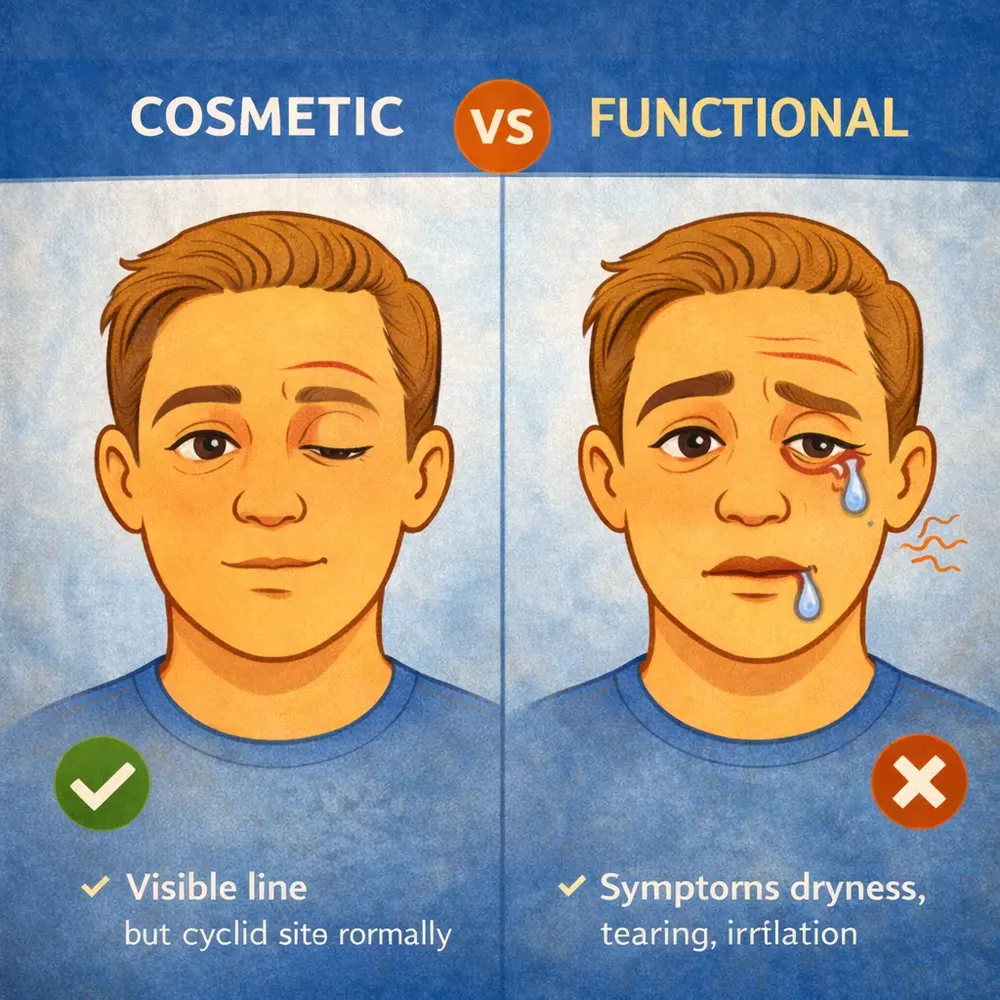
Cosmetic vs functional scar (quick comparison)
- Cosmetic: visible line, but eyelid sits normally and feels comfortable
- Functional: lid is pulled in/out, closure is incomplete, irritation/dryness develops
Functional changes are the strongest reason to seek evaluation.
What success looks like after trauma
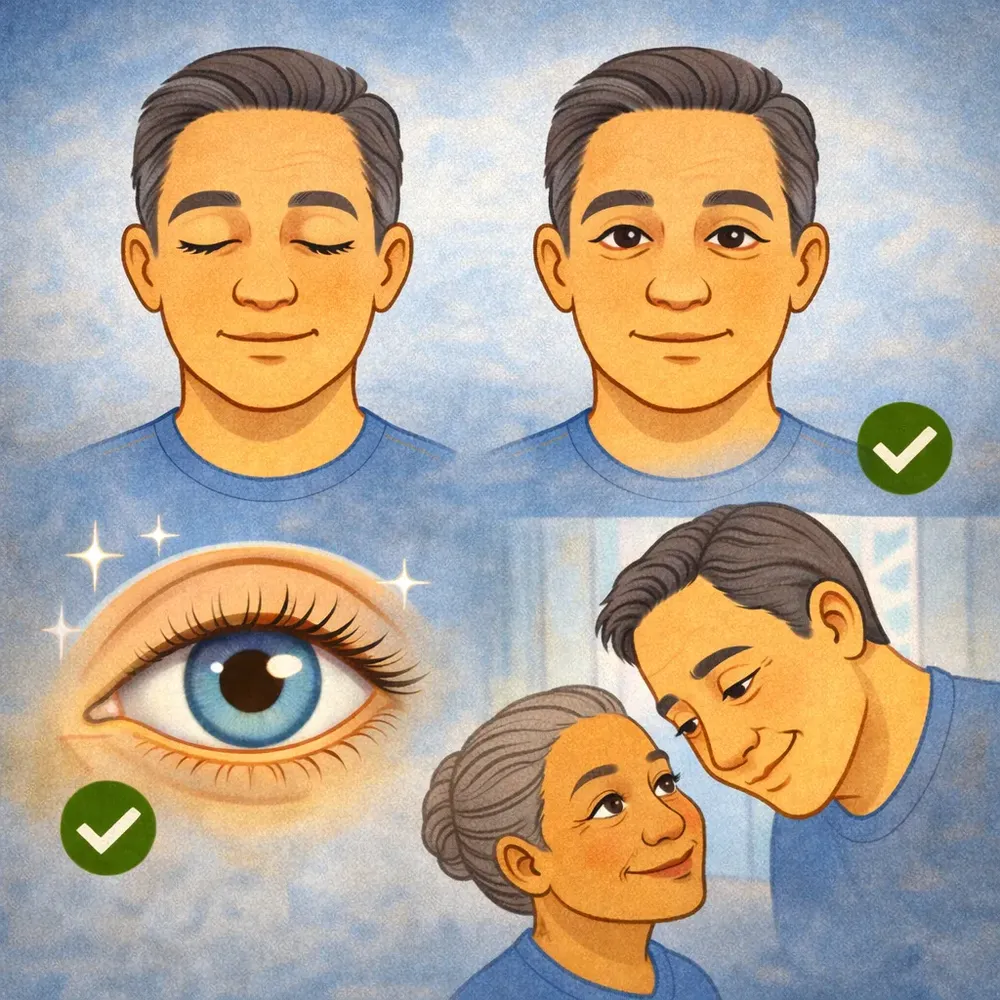
- Comfortable eyelid closure and corneal protection
- Stable contour without pulling
- Reduced irritation, tearing, and exposure symptoms
- Natural-looking symmetry in daily life
Great results are practical: they look good and feel good.
Frequently Asked Questions
Is it too late to improve an old scar?
Not necessarily. Many scars can be improved later—especially if they affect eyelid position or comfort.
Should I wait a full year before considering revision?
Some scars benefit from time, but functional problems may need earlier evaluation.
Will revision remove the scar completely?
Revision aims to improve contour and symptoms. Scars often become less noticeable, but the main goal is function and a natural appearance.
What should I do if symptoms change suddenly?
Sudden vision changes, severe pain, or rapidly worsening swelling should be evaluated urgently in person.
What should I do if symptoms change suddenly?
Sudden vision changes, severe pain, or rapidly worsening swelling should be evaluated urgently in person.
How can I tell if things are improving normally?
Normal recovery usually shows gradual improvement in comfort, swelling, and function over time. If you notice worsening pain, new vision changes, or a new functional limitation, seek in‑person evaluation.
Why See an Oculoplastic Surgeon?
Trauma care often needs a balance of function (vision, comfort, eyelid closure, tear drainage) and appearance (symmetry, natural contour). An oculoplastic surgeon is specifically trained for eyelid, tear duct, and orbital reconstruction.
Alexander Rabinovich, MD provides oculoplastic trauma evaluation and reconstruction in New York City and Brooklyn. If a scar is pulling the eyelid or causing irritation, you don’t have to wait indefinitely. A targeted evaluation can clarify options and timing.
Educational content only; not a substitute for medical advice. If you have sudden vision changes, severe pain, or worsening symptoms after an injury, seek urgent in-person care.
Book a Scar & Eyelid Position Evaluation
For an overview of services and what we treat, visit Eye Trauma. You can also book a consultation below.

Leave a reply