
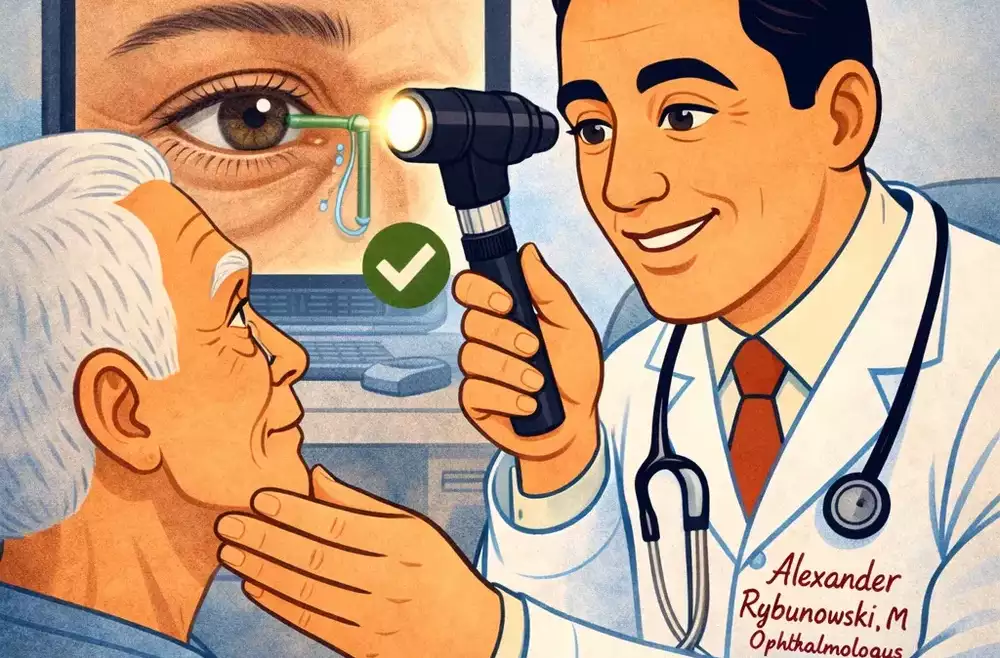
Post‑Traumatic Ptosis Explained
A deeper look at eyelid drooping after injury, evaluation, and treatment timing.
Ptosis is drooping of the upper eyelid. After trauma, ptosis can appear immediately or become more noticeable as swelling decreases.
The challenge is that ptosis has different causes: temporary inflammation, tendon stretching, nerve-related changes, or scarring. A targeted exam clarifies which mechanism is driving the droop and how likely spontaneous improvement is.
For trauma-related eyelid evaluation, see Eye Trauma.
At a Glance
- Common causes: swelling, tendon injury, nerve effects
- Impact: visual obstruction + asymmetry
- Exam: lid measurements + levator function
- Observation: sometimes appropriate early
- Surgery: considered if persistent and impactful
- Goal: stable lid height + natural crease
Why ptosis can happen after trauma
- Swelling weighing the lid down temporarily
- Levator aponeurosis injury (stretching or detachment)
- Direct muscle injury
- Nerve-related changes
- Scar-related tightness
Different causes look similar in the mirror. Measurements and function testing make the difference.
How ptosis affects daily life
- Upper visual field obstruction (reading, driving)
- Forehead strain from brow lifting
- “Tired eye” appearance that shows in photos
- Dryness or irritation if eyelid mechanics change
Even mild ptosis can feel “bigger” late in the day when facial muscles fatigue.
A realistic healing timeline (what you might notice)
Healing varies, but many patients describe a similar pattern:
- Days 1–3: swelling and bruising can peak; it may look worse before it looks better.
- Days 4–7: swelling begins to soften; comfort often improves; early contour becomes easier to assess.
- Weeks 2–4: bruising fades; symmetry and function become more stable; ongoing irritation should be improving.
- Months 2–6: scars and subtle contour changes continue to refine; final “settled” appearance becomes clearer.
What matters most is the trend. Steady improvement is reassuring. New or worsening functional symptoms deserve a check‑in.
Common myths (and what’s actually true)
- Myth: “If it doesn’t hurt much, it can’t be serious.”
Reality: Some injuries affect alignment, drainage, or eyelid position with surprisingly little pain. - Myth: “If the skin is closed, everything underneath is fine.”
Reality: Inner-corner injuries can involve tear drainage, and fractures can change eye position even after swelling resolves. - Myth: “I should just wait until swelling is completely gone.”
Reality: Early evaluation can be important for time‑sensitive issues and creates a baseline for safe observation.
The goal isn’t to overreact—it’s to match your symptoms to the anatomy that was injured, so you don’t miss a fixable problem.
How ptosis is evaluated
A specialist evaluation may include lid height measurements, crease position assessment, levator function testing, and a check of eyelid closure quality. The exam also evaluates tear film comfort and any scarring from lacerations.
In trauma cases, your provider also checks for orbital changes that can make the lid appear lower even if the lifting mechanism is intact.
Treatment timing: observation vs repair
Observation can be appropriate when ptosis is likely swelling-related and early improvement is seen. Your surgeon may recommend a time-based follow-up plan to track change.
Repair is considered when ptosis persists and affects vision or symmetry. The technique depends on levator function and the structural cause. The aim is stable height with a natural crease and comfortable closure.
Recovery expectations
Most patients see early swelling improvement within 1–2 weeks after any intervention, with continued refinement over time. Follow-up ensures the eyelid height and contour remain stable as tissues settle.
When trauma is part of the story, the plan also considers scarring and tear film comfort, not just lid height.
What to watch for during the first two weeks
The early healing period is when you’ll notice whether symptoms are trending in the right direction. It’s helpful to track:
- Whether swelling is steadily improving
- Whether comfort is improving with blinking and screen time
- Whether tearing or dryness is changing
- Whether eyelid contour looks more stable day to day
If something is getting worse instead of better, that’s a reason to contact your surgeon.
A simple next‑steps plan
If you’ve had an eyelid or orbital injury and you’re unsure what matters most, a structured evaluation is the fastest way to clarity. You can review what’s treated and what to expect on our Eye Trauma page, then schedule an appointment for individualized guidance.
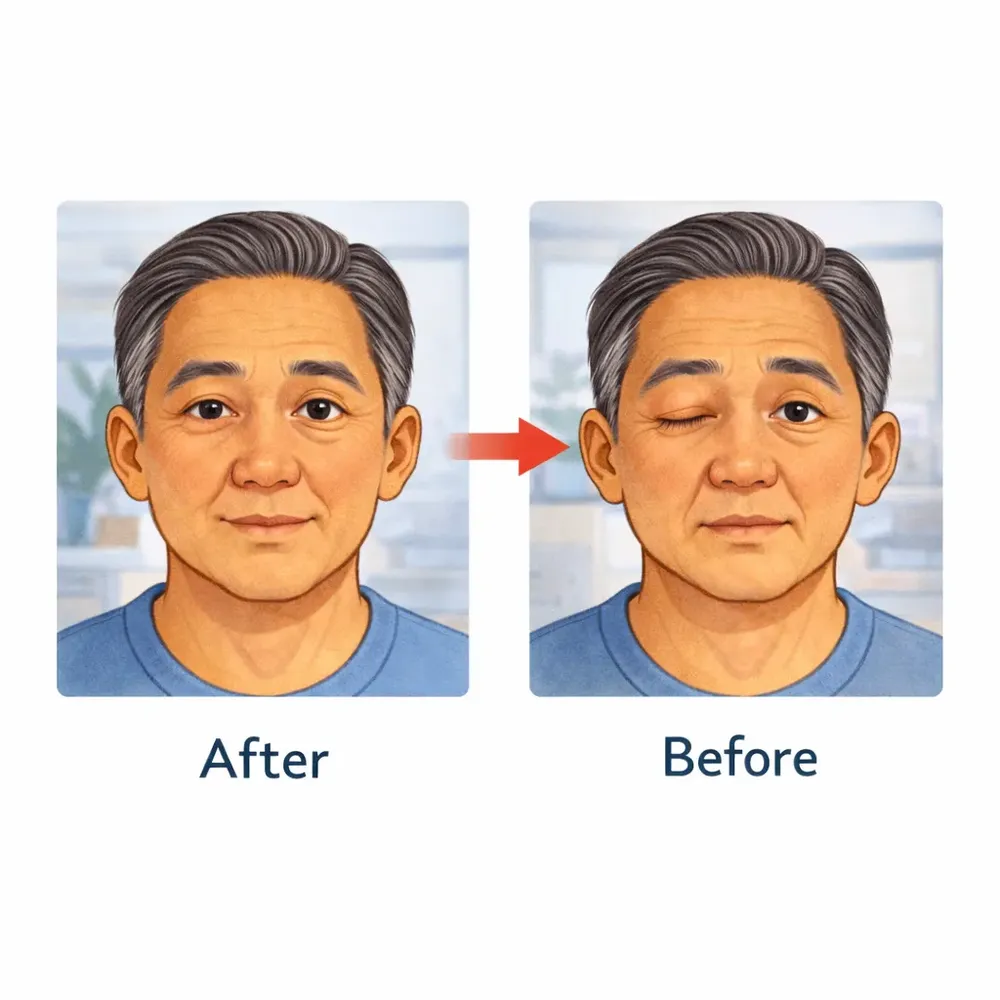
Subtle ptosis and the “photo test”
Many patients first notice ptosis by comparing photos—one eye looks smaller or the upper lid sits lower. This is common after trauma and is a useful clue for evaluation.
Measurements confirm whether the lid is truly lower and whether the droop is stable or changing over time.
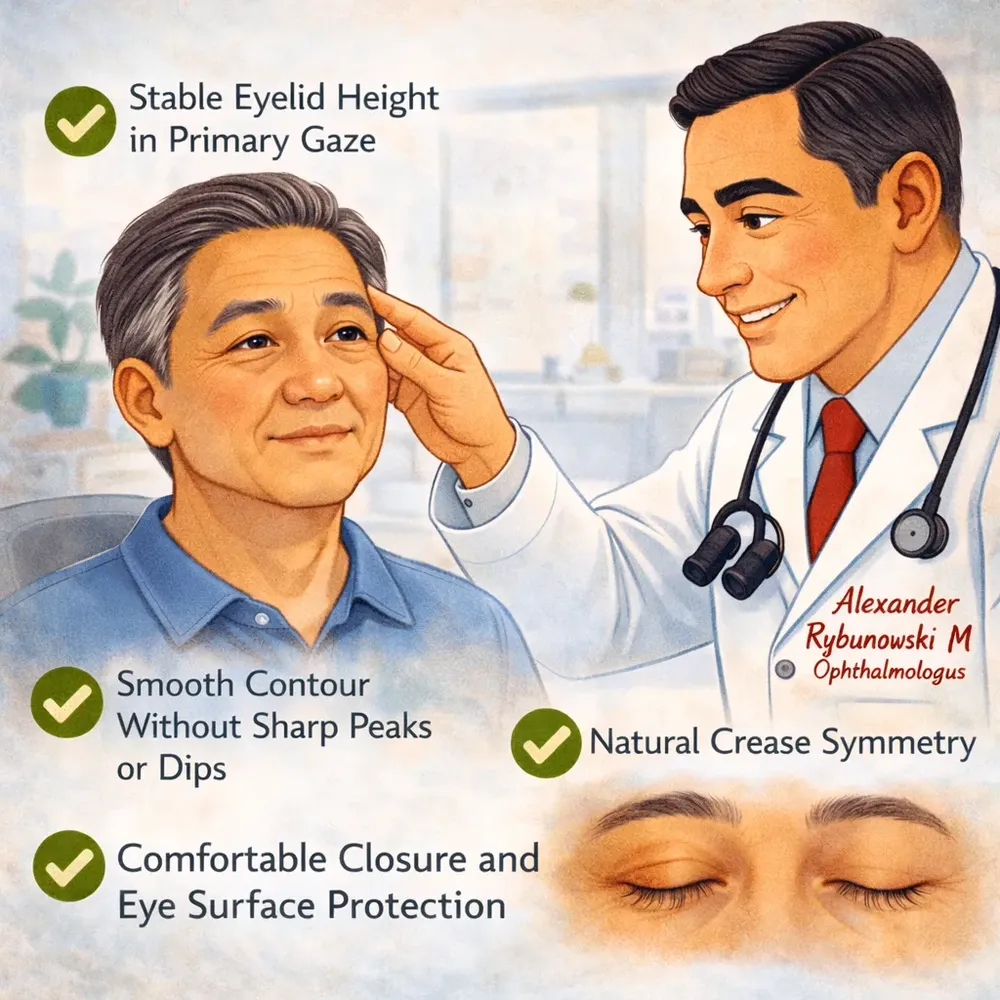
What makes a natural-looking result
- Stable eyelid height in primary gaze
- Smooth contour without sharp peaks or dips
- Natural crease symmetry
- Comfortable closure and eye surface protection
In trauma care, “natural” means both how it looks and how it feels.
Frequently Asked Questions
Will post-traumatic ptosis go away on its own?
Sometimes—especially if swelling is the main cause. Persistent ptosis may reflect tendon or muscle involvement and should be evaluated.
When is surgery considered?
When drooping persists and affects vision, symmetry, or comfort. Timing depends on the cause and healing stage.
Will the scar be visible?
Incisions are typically placed in natural eyelid creases whenever possible.
What should I do if symptoms change suddenly?
Sudden vision changes, severe pain, or rapidly worsening swelling should be evaluated urgently in person.
What should I do if symptoms change suddenly?
Sudden vision changes, severe pain, or rapidly worsening swelling should be evaluated urgently in person.
How can I tell if things are improving normally?
Normal recovery usually shows gradual improvement in comfort, swelling, and function over time. If you notice worsening pain, new vision changes, or a new functional limitation, seek in‑person evaluation.
Why See an Oculoplastic Surgeon?
Trauma care often needs a balance of function (vision, comfort, eyelid closure, tear drainage) and appearance (symmetry, natural contour). An oculoplastic surgeon is specifically trained for eyelid, tear duct, and orbital reconstruction.
Alexander Rabinovich, MD provides oculoplastic trauma evaluation and reconstruction in New York City and Brooklyn. A measurement-based exam can clarify whether ptosis is improving naturally or whether structural repair would offer a better long-term outcome.
Educational content only; not a substitute for medical advice. If you have sudden vision changes, severe pain, or worsening symptoms after an injury, seek urgent in-person care.
Book a Ptosis Consultation
For an overview of services and what we treat, visit Eye Trauma. You can also book a consultation below.

Leave a reply