Botox may be discussed for certain expression lines caused by muscle activity, while eyelid surgery may be considered for concerns such as excess eyelid skin or eyelid drooping. Neither option is right for every person, and an examination is needed to identify what is contributing to a particular concern.
It can be difficult to tell whether a change around the eyes is a wrinkle, a shift in brow position, extra skin, or a drooping eyelid. These concerns can look similar in a photograph but involve different structures and may call for different conversations. Understanding the distinction can help you describe what you notice and ask useful questions during a consultation—without trying to diagnose yourself.
Start with what is changing—and when you notice it
Notice whether the concern appears mainly when you move your face, remains visible when your face is relaxed, or seems to affect the position of the brow or eyelid. This observation is useful context, not a way to determine the cause on your own. Facial expressions, lighting, camera angle, fatigue, and natural differences between the two sides can all influence how the eye area looks.
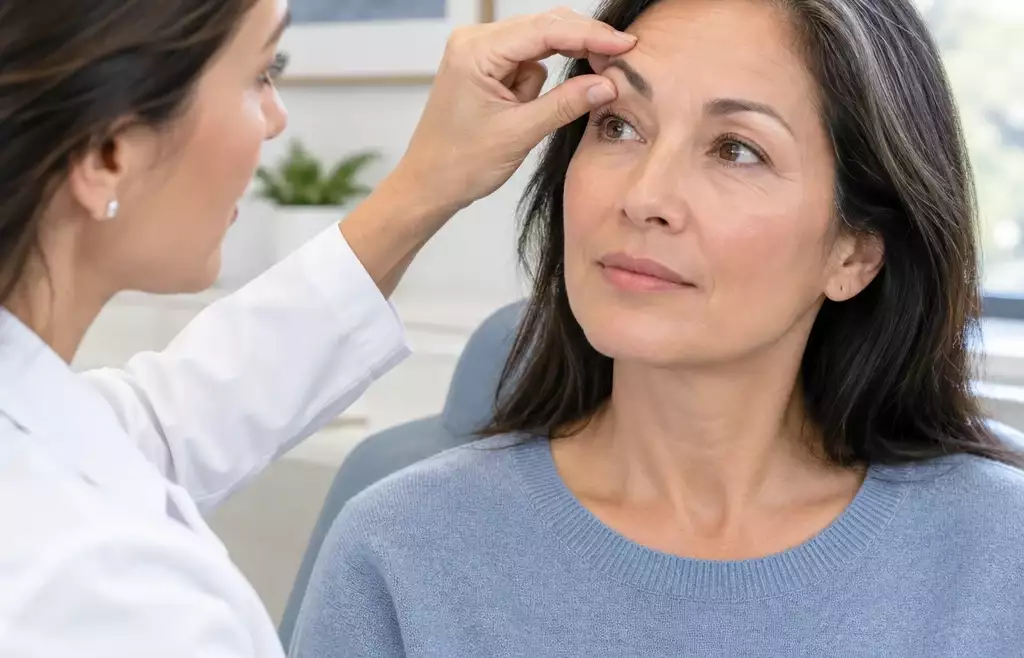
For example, lines that become more noticeable when someone smiles may be expression lines. Skin that seems to fold over the upper eyelid may be related to excess skin, but the appearance can also be affected by brow position or eyelid position. A clinician can assess the area while your face is relaxed and moving, and ask when the change began and whether it affects vision or daily activities.
Describe the specific change you see rather than beginning with a procedure name. “The lines at the outer corners appear when I smile” or “my upper eyelid looks lower than it used to” gives the clinician a clearer starting point than assuming Botox or surgery is the answer.
What Botox can—and cannot—address
Botox is a brand of botulinum toxin treatment. These treatments temporarily reduce activity in selected muscles. When a clinician considers them for cosmetic use, the goal may be to soften certain lines that appear with muscle movement. The effect is temporary and variable; it is not a permanent change to facial anatomy.
Botox does not remove skin, lift tissue in the same way as surgery, or fill a hollow. It also does not directly correct every reason an eyelid or brow may look low. The result depends on the concern, the muscles involved, facial anatomy, and clinical judgment. A clinician should discuss possible benefits, limitations, and risks based on an individual assessment rather than promise a particular appearance.
The eye and brow area requires careful evaluation because muscles around the forehead and eyes work together. Reducing activity in one area can influence the way the brow or upper face appears. If a person already notices heaviness or a low brow, that concern is important to raise before discussing treatment. For an overview of the practice’s non-surgical anti-wrinkle injection options, review the service information and discuss whether the treatment is relevant to your goals.
Expression lines are different from eyelid skin concerns
Expression lines are creases associated with repeated facial movement. Lines at the outer corners of the eyes, for instance, may become more apparent during a smile. Depending on the individual assessment, a clinician may discuss whether a temporary muscle-relaxing treatment could soften their appearance. Lines that remain when the face is at rest may have other contributing factors as well, and should not automatically be assumed to respond in the same way.
Extra upper-eyelid skin is a different concern. A fold of skin can overlap the natural crease or rest near the lashes. Botox does not remove this skin. Whether surgery is appropriate, what type of assessment is needed, and what outcome is realistic depend on the anatomy and the person’s concerns. An examination can help distinguish skin laxity from changes in brow or eyelid position.
Under-eye concerns also deserve their own assessment. Fine lines, puffiness, shadows, and hollows are not interchangeable problems, and a treatment intended for expression lines does not necessarily address them. Avoid treating the word “wrinkles” as a complete description; explain where the concern is, when it shows, and what change you hope to see.
Brow position and eyelid drooping are not the same thing
The brow sits above the eyelid, so a lower brow can make the upper eyelid area look heavier. Eyelid drooping refers to the position of the eyelid itself. These changes may appear together or separately, and their causes cannot be determined from a brief description alone. Natural asymmetry is also common: one brow or eyelid may sit differently from the other even when there is no new problem.
Because Botox reduces selected muscle activity, it should not be described as a general-purpose lift or as a way to remove a drooping eyelid. In some people, the relationship between muscle activity, brow position, and eyelid appearance makes treatment planning particularly important. A clinician should hear about existing heaviness, prior changes, and any concern that the eyelid interferes with seeing.
If drooping has appeared suddenly, is changing, or comes with other symptoms, seek prompt medical evaluation rather than treating it as a cosmetic issue. A clinician can help determine what kind of assessment is appropriate. Do not assume a new change is simply aging or a matter for cosmetic injections.
What an eyelid surgery consultation can clarify
“Eyelid surgery” can refer to procedures intended to address particular eyelid concerns, but the phrase alone does not establish which procedure—or whether any procedure—is suitable. A consultation can assess the eyelid and surrounding structures, discuss the reason for the concern, and explain the available options and their limitations. Depending on the findings, a clinician may discuss surgery, a non-surgical approach for a separate concern, or no treatment.
Surgery and Botox are not interchangeable. Surgery may be considered when the concern involves tissue or eyelid position that a temporary reduction in muscle activity cannot correct. Botox, when appropriate, may be discussed for selected expression lines, but it will not remove excess skin. A person can also have more than one concern; a treatment plan should address each separately rather than imply that one procedure solves everything.
Ask what the clinician believes is contributing to the appearance, what each option is intended to change, and what it is not expected to change. If the concern is functional—such as an effect on the field of vision—say so clearly. The assessment should account for both appearance and function where relevant.
How to prepare for a useful consultation
Bring a concise description of what you notice and what matters most to you. You might explain whether the concern appears during smiling, is present at rest, involves the upper or lower eyelid, or seems to have changed over time. If your goal is to look less tired, for example, mention that goal without assuming the cause is excess skin or muscle movement.
- Share your medical history: Tell the clinician about relevant health conditions, eye concerns, allergies, and medications or supplements. Do not stop a prescribed medication unless the prescribing clinician advises you to do so.
- Discuss previous treatments: Mention prior Botox or other injectable treatments, eyelid or facial procedures, and any effects or concerns you experienced.
- Explain timing and function: Say when you first noticed the change, whether it is progressing, and whether it affects vision, comfort, or daily tasks.
- Ask about the assessment: Find out how the clinician distinguishes expression lines, skin changes, brow position, and eyelid position in your case.
- Ask about trade-offs: Discuss expected changes, limitations, risks, recovery considerations if surgery is considered, and whether observation or another evaluation may be appropriate.
It can also help to bring questions rather than a fixed treatment request. In Brooklyn, a face-to-face conversation with a qualified clinician can put your observations in context and allow you to understand why one option may be more relevant than another.
Set expectations around benefits, risks, and timing
Botox results are temporary, and the timing and degree of change vary. It does not guarantee that lines will disappear or that the brow and eyelid will look identical on both sides. A clinician should explain the potential risks and what to do if you have concerns after treatment. As with any medical procedure, suitability depends on an individual assessment.
Eyelid surgery is a different category of treatment and involves its own evaluation, risks, and recovery considerations. A consultation should explain what a proposed procedure is intended to address and what results cannot be promised. It should also clarify whether the concern is cosmetic, functional, or both, and whether further evaluation is needed before making a decision.
Any injection around the face should be performed by an appropriately qualified professional who can assess the anatomy and discuss risks. After botulinum toxin treatment, difficulty breathing, swallowing, or speaking requires immediate medical attention. These symptoms are serious; do not wait for a routine follow-up if they occur.
Frequently asked questions
Can Botox remove loose skin from my upper eyelids?
No. Botox temporarily reduces activity in selected muscles; it does not remove skin. A clinician can assess whether the appearance relates to skin, brow position, eyelid position, or a combination of factors and explain which options may be relevant.
Can Botox fix a drooping eyelid?
Botox is not a general treatment for eyelid drooping. The cause and location of the droop need professional assessment, especially if it is new, changing, or affecting vision. Do not choose an injection based only on how the area looks in a photograph.
Are lines at the outer corners of the eyes always treated with Botox?
No. Some lines are more visible with expression, while others may remain at rest or occur alongside other changes. A clinician can assess the pattern and discuss whether a muscle-relaxing treatment is appropriate, including its limits.
Could Botox make my brow or eyelid feel heavier?
Changes around the forehead and eye area depend on individual anatomy and treatment planning. If you already experience brow or eyelid heaviness, tell the clinician before considering injections and ask how that concern affects the assessment and discussion of risks.
Should I choose surgery if Botox is not suitable?
Not necessarily. If Botox is not a match for your concern, that does not automatically mean surgery is needed. An examination can clarify whether another approach, additional evaluation, or no treatment is appropriate for your goals.
Discuss the concern before choosing a procedure
The most useful first step is to identify what you want evaluated: movement-related lines, extra eyelid skin, brow position, eyelid drooping, or a change that affects vision. Botox and eyelid surgery serve different purposes, and an individualized assessment helps set realistic expectations without assuming that either is the answer.
If you are considering treatment in Brooklyn, Eye Plastics NY invites you to discuss your concerns and questions with the practice. Learn about Botox and Xeomin treatment options and ask whether they fit the concern you want assessed. You can also explore more Botox patient guides as you prepare for a conversation with a clinician.
Leave a reply